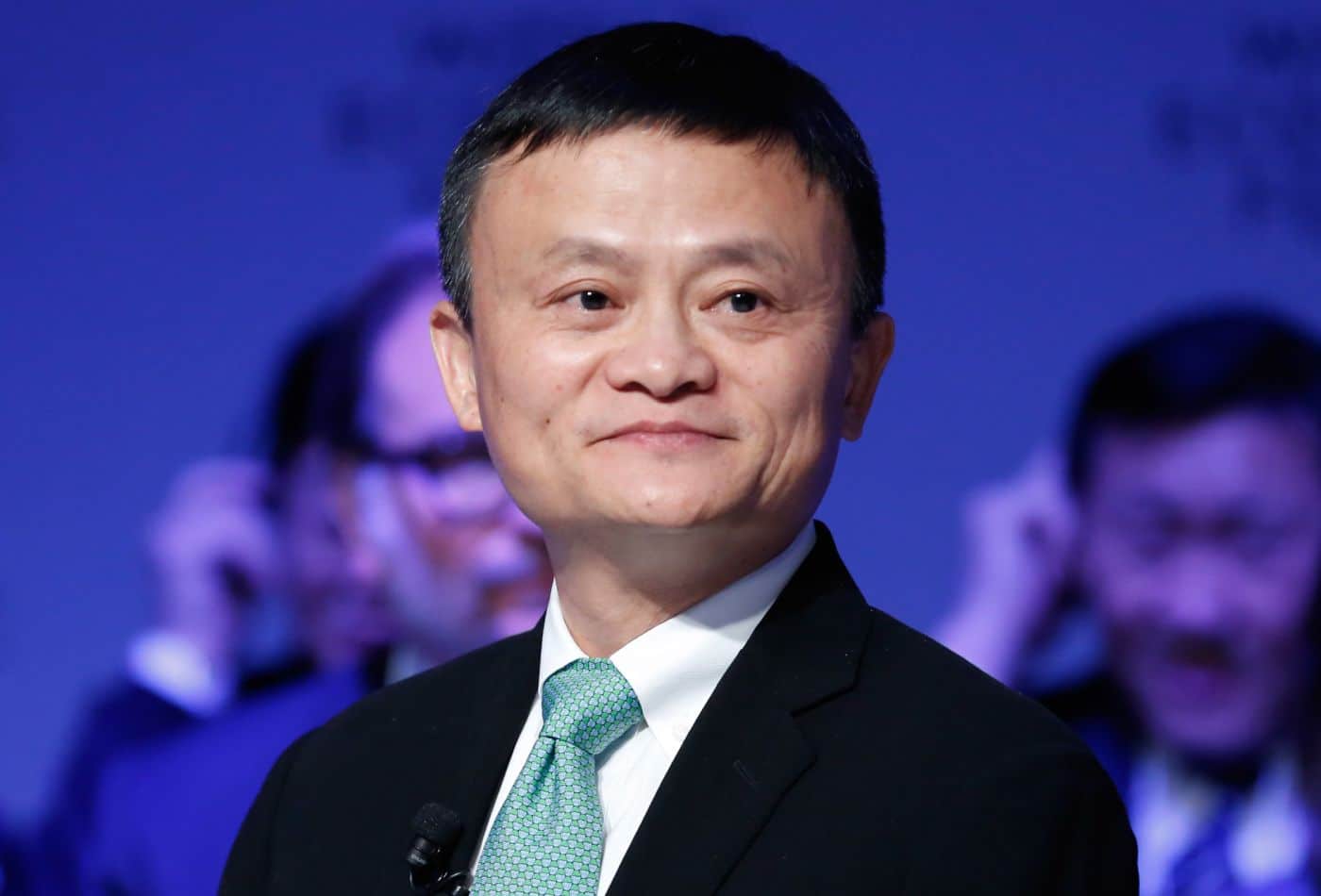
Jack Ma, the visionary tech leader and entrepreneur, gave a speech to highlight the accelerating pace of technological growth and automation in 2026, emphasizing that hard work alone is no longer sufficient to succeed. Instead, the key to wealth and success lies in mastering five unique human skills that machines cannot replace. The speaker presents five essential skills in detail, supported by real-world examples, practical advice, and motivational insights.
Here is what he talked about:
We are entering 2026, a year that is moving so fast, it doesn't even stop to breathe. Technology is
growing. AI is working overtime. Your refrigerator knows more about your eating
habits than your doctor. And your phone is smarter than half of your relatives.
The world is changing aggressively. And if you want to win in it, you cannot
rely on the basic mindset of just working hard. Hard work used to be the key,
but today even insects work hard. The ant in your kitchen is more disciplined than most people I know. So what will make you rich? Not muscles, not degrees,
not how much data your phone has, it's skills. Five human skills that can
survive even in a world where robots do 90% of everything. Today we start with
the first one. And trust me, it's not what you expect. The first skill is the
most underrated talent, the ability to notice what everyone else ignores.
I call it the skill of seeing the useless. Because the truth is, the richest people in the world didn't discover diamonds.
They discovered small, annoying problems everyone else walked past. Think about
some of the most successful ideas in the world. They didn't come from big
genius moments. They came from people paying attention. One example, the story
of Airbnb. Two guys noticed something incredibly boring. Hotels were expensive
during big events and people had empty rooms. That's it. Nothing magical. They
observed what everybody else ignored.
Today, a multi-billion dollar company built on the simple idea of people have space, other people need space. Here's
another one. Crocs, ugly shoes, right? At least that's what the world said. But
someone noticed something the rest of the world ignored. They are comfortable.
Too comfortable. Comfortable enough that people would secretly love them even
if they pretend not to. That tiny observation turned into a global brand worth
billions. That's the power of noticing the boring everyday things.
In 2026 this skill becomes even more powerful. Why? Because everyone is trying to build big, complicated things. Everyone wants to create the next giant app, the next
breakthrough technology. But the real gold is always lying on the
ground. Small problems, simple solutions, consistent demand.
AI can calculate, design, analyze, but it
still cannot feel the irritation a human feels when a fry falls between the car seats. Speaking of that, one of the most ridiculous products I've ever seen
made millions. A man noticed people continuously dropping fries and coins into
that tiny gap between the car seat and the hand break. So he invented a cheap
piece of plastic to block it. Cost almost nothing to produce. Sold like it was
a luxury item. Because people are ready to fight the government, but they refuse
to lose a French fry. This is what I want you to understand. Ideas don't come
from genius. Ideas come from paying attention.
Slow Down and Observe
Here's a small exercise for you. Slow down. Observe people. Watch where they struggle. Listen to what annoys them. Notice what they repeat every single day without. These tiny moments are opportunities to wearing boring clothes. Wealth does not come from intelligence. It comes from awareness. You don't need to be the smartest person in the room, just the one who is actually looking.
Pay Attention
First Skill
2026 will reward the people who pay attention and punish the people who rush blindly. So stop saying there are no opportunities. Opportunities are everywhere. They walk past you daily. You just don't look at them because busy scrolling.
That is the first skill. OBSERVE what everyone else ignores. The world is full of gold, but most people are staring at their phones while stepping on it.
Before we go into the second skill, let me remind you of something. In 2026, machines will be everywhere. They will write emails, answer calls, design logos, diagnose problems, and maybe even judge your fashion choices. But there is one thing a machine still cannot replace. The human spirit. The human ability to connect, influence and inspire.
Second Skill
The second skill that will make you rich in 2026 is something every successful person secretly relies on, but nobody teaches it properly. This is the skill of Human COMMUNICATION. Not fancy English, not a deep vocabulary, not trying to sound intelligent. I'm talking about the powerful, rare ability to talk in a way people actually want to listen. Communication is not speaking, everyone speaks. Some people speak too much. Communication is when your words create moment. When your ideas make someone feel something. When your message enters a person's mind and stays there longer than your New Year's resolutions.
Let me give you an example. There's a reason some people can raise millions with just a pitch, while others can't even convince their family to try a new restaurant. It's not because the idea is better. It's because the communication is better. People don't follow ideas. They follow the emotion attached to the idea. Think about Steve Jobs. Forget the forgets for a moment. What made him legendary was the way he communicated. He could hold a room with a single sentence. He didn't sell gadgets; he sold the feeling of being part of something special. That skill made billions.
Another example, Oprah. Millions of people listened to her for decades, not because she was the smartest person in the room, but because she made feel understood. When she spoke, people felt seen. That is money. Let's make it even simpler. Imagine two sellers. Seller A says, "This bottle is good for you. Buy it." Seller B says, "This bottle will keep you hydrated, fresh,
energetic, and ready for the day." Guess who gets the sale?
Communication is not about information. It's about translation. You translate your idea into someone else's desire. One of my students, one said. " Sir, I know everything, but nobody listens to me. "I said, Then you know nothing. If a people don't understand you, your knowledge is useless." That's the truth we avoid. Communication is the bridge between your brain and the world. If you cannot cross that bridge, your ideas die inside you.
The best part, this is the richest skill in the world. Business need communicators. Investors believe communicators. In 2026, when everyone is hiding behind screens, the person who can speak clearly will always stand out.
Now, let me tell you how to improve this skill. Not the boring way, the real way. First, stop trying to impress people. Impressing people is the
fastest way to sound fake. Speak simply. Some of the most powerful leaders use
the simplest words.
First, stop trying to impress people. Impressing people is the fastest way to sound fake. Speak simply. Some of the most powerful leaders use the simplest words.You don't need to speak like a dictionary. You need to sound like a human.
Second, Listen More. You cannot communicate well if you don't understand the person in front of you. Most people listen only to reply. Great communicators listen to understand.
Third, add stories. Humans are addicted to stories. You may forget a fact, but you will never forget a story touched you.
Fourth, control your tone. A message spoken with confidence hits differently. A message spoken with panic scares everyone. Calm energy creates trust.
Finally, be honest. In a world full of filters, Photoshop, fake lifestyles and rented cars used as success videos. Honesty is the most attractive skill left.
People follow those who speak truth with kindness and courage. This is the power of communication. It turns ordinary things into valuable things. It turns ideas into movements. It turns strangers into customers. And it turns a simple message in to money. Machines can calculate faster than us. Machines can organize better than us. Machines can write faster than us. Machines can organize better than us, but machines can not touch the human heart. The person who communicates well will always control the room, the deal, the opportunity and eventually the wealth.
Third Skill
Now we move to the third skill, and this one
is the reason some people rise faster in life while others stay stuck even if
they work twice as hard. The third skill is the ability to learn fast and adapt
even faster. Not book learning, not memorizing definitions, not collecting
certificates. I mean the ability to adjust quickly when life suddenly changes
its mood, which it does every few months.
In 2026, the world will change so
quickly that if you wait too long, opportunity will pack its bags and leave.
Those who adapt fast will grow, and those who wait for the perfect moment will
stay exactly where they are. Think about Netflix. Their biggest strength wasn't
movies. It was adaptability. When DVDs became old, they moved to streaming.
When streaming became crowded, they moved into creating original shows. Every time
the world shifted, they shifted faster. That's why they're still here.
Look at YouTubers. One year long videos
boom. Next year shorts explode. Next month, nobody knows what's happening. The
creators who adapt survive. The creators who complain disappear. Adaptation is
not about changing everything. It's about staying flexible. Just like how your Wi-Fi
sometimes stops working until you turn it off and on again, humans also need
that reset.
One of my students once told me, "Sir,
I don't want to start something new until I'm ready." And I said, "If
you wait to be ready, you'll be waiting your whole life." The people who
win are never fully prepared. They jump in, they learn while doing, they adjust
as they go along. Adaptability is also about removing ego. Some people fail
simply because they refuse to update themselves. They think learning something
new makes them look weak. But the truth is nothing is more powerful than
someone who can reinvent themselves whenever needed.
Let me give you a real example. There was a
small restaurant owner during the pandemic who was about to lose everything.
Customers vanished. Bills piled up. Instead of panicking, he turned his kitchen
into a meal prep business for gym members. Then turned those meals into
delivery packs. then started selling sauces online. Today, he earns more than
he ever did with his restaurant. Not because he had a big plan, but because he
adapted before it was too late. Adaptability doesn't mean you change your
goals.
It means you change your methods until your
goal becomes reality. And here's the secret. Fast learners are not born.
They're made. They don't waste time proving they're right. They focus on
improving. They don't freeze when things go wrong. They ask, "Okay, what
now?" The world in 2026 will belong to people who can move quickly, learn
quickly, and recover quickly. If you can adapt faster than others, you will
never be out of opportunities. Because while everyone else is stuck complaining
about how things used to be, you will already be building something new.
Fourth Skill
The fourth skill is something most people
misunderstand completely. They think it's boring, they think it's difficult,
and they think they can avoid it forever. But the truth is this skill quietly
decides who becomes rich and who stays busy pretending to be productive. The
fourth skill is managing your emotions especially under pressure. In 2026,
opportunities will come fast and problems will come even faster. If your
emotions control you, you will make the wrong decisions at the worst possible
time. But if you control your emotions, you can stay calm when everyone else is
panicking. And that alone gives you an advantage that almost feels unfair.
Let
me give you an example. Two people invest money. One starts checking the market
every 5 minutes like it's a heartbeat monitor. The moment it drops slightly, he
panics, sells everything, and makes sure he loses. The second person stays
calm, ignores the noise, waits for the right time, and makes a profit. Same
investment, different emotions, completely different results. Look at athletes.
The greatest athletes aren't the strongest. They're the ones who stay collected
when millions are watching. that mental stability is a skill, not a gift.
Here's a business example. During a crisis, most companies freeze or make rush
decisions. Meanwhile, the calm ones make strategic moves that changed their
entire future. When the world panicked during big global shifts, companies like
Zoom grew insanely fast simply because they knew exactly what they were doing
while others were confused. Emotional control also affects your daily life more
than you think. Someone rejects you, you quit your project.
A friend teases you, you lose motivation.
One bad day, you give up for a week. This emotional roller coaster is why many
talented people never succeed. Not because they lack skill, but because they
lack stability. Let me tell you a small story. A young entrepreneur once had a
huge investor meeting. Right before the meeting, his laptop crashed, his slides
disappeared, and even his shirt got a coffee stain. Most people would have
exploded. He didn't. He entered the meeting, smiled and said, "My
presentation died, but my idea is still alive. Let me explain it to you."
Guess what? He got the investment not because of his slides. Because of his
calm, people trust calm people.
Teams follow calm leaders. Customers rely
on calm service. The world always rewards emotional discipline because it is so
rare.
So, how do you build this skill? Start with small things. When something
goes wrong, pause before reacting. When you feel angry, don't speak yet. When
you feel stressed, breathe first. You train emotional control the same way you
build muscle. Repetition. Once you master this, you will not fear unexpected
problems. You will handle challenges while others break down. And when
everything collapses, you will be the person still thinking clearly. That's the
fourth skill. The power to stay steady when life is not.
Fifth Skill
Now we reach the final skill. And this one
is the most dangerous in the world. Dangerous because once you master it,
nobody can stop you. It doesn't matter where you started, who doubted you, or
what your past looks like. This skill can turn an ordinary person into a force
that feels unstoppable.
The fifth skill is the ability to take
action without waiting for perfect conditions. Most people fail not because
they lack talent, but because they delay every dream they have. They wait for
the right time, the right mood, the right amount of confidence, the right
amount of money, the right weather, the right alignment of the planets. And by
the time everything is right, 10 years have passed and they're still standing
at the starting line. Success goes to the people who move, not the people who
plan forever.
Look at some of the biggest success
stories. Most companies didn't start when everything was ready. They started
when things were messy. Amazon began in a garage. Instagram began as a small
check-in app that didn't even work properly. Even some of the biggest
restaurants today began with borrowed stoves and cheap plastic chairs. Nothing
was perfect, but action created improvement, and improvement created success.
You don't need perfect conditions, you need movement.
One of my favorite examples is the creator
of Spanx, Sara Blakeley. She had no experience in fashion, no investors, no
team, no fancy office. She just had an idea and the courage to start. She
didn't wait to learn everything. She didn't wait for permission. She took
action while learning on the way and became a billionaire. But here's the funny
thing. Most people don't even fail. They simply never start. They say things
like, "I'll start tomorrow, next week," or the classic, "When I
feel motivated." But motivation is like Wi-Fi. Sometimes it works,
sometimes it doesn't, and sometimes it disappears right when you actually need
it. Action creates motivation, not the other way around.
I once met a young guy who told me,
"Sir, I'll start my business when I'm confident." I told him,
"Confidence doesn't come before action. It comes after action." You
don't become confident before starting. You become confident because you
started. Every major breakthrough in your life will come from tiny steps taken
when you didn't feel ready. Want to know a secret? Nobody feels ready. Not even
the big people you admire. They just move anyway. This is why action is the
final skill. While everyone else is preparing, you are progressing. While
everyone else is thinking, you are building. While everyone else is waiting,
you are growing.
In 2026, the gap between the dreamers and
the doers will become even wider. And the crazy part, the doers are not always
smarter. They're simply braver for five minutes longer. Action beats talent.
Action beats fear. Action beats perfection every single time. And when you
combine all the skills we talked about, seeing what others ignore,
communicating well, adapting fast, controlling your emotions, you become
someone who doesn't just survive the future. You shape it.
Now you have the full set of skills. Five
human powers that machines cannot replace. Five skills that can build wealth,
confidence, opportunity, and a life worth living. And remember, the future is
not waiting for you, but it will absolutely reward you if you move.